International Journal of Human Anatomy · ISSN 2577-2279
Editorial board
The anatomists, clinicians and educators who assess what this journal publishes, named individually with their institution and, where the journal holds one, an available ORCID identifier.
Editorial leadership
The Editor-in-Chief conducts the initial assessment before a manuscript may proceed to external peer review.
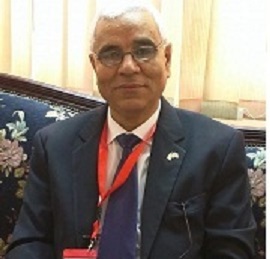
Editor-in-Chief
Abdelmonem Awad Mustafa Hegazy
Professor, Zarqa University
· Egypt
The Editor-in-Chief assesses each submission against the journal's published scope and then assigns it to a board member working in the relevant anatomical field. That editor selects reviewers and carries the manuscript to a decision. Where an editor has an interest in a submission, it is handled independently of them.
Editorial board members
The 25 members of the board besides the Editor-in-Chief, listed alphabetically by family name. Each entry links to that member's IJHA profile.

Adejoke Elizabeth Memudu
Associate Professor/ Head of Department , Edo University Iyamho, Iyamho, Edo
Nigeria
Bukola Rukayat Omotoso
University of KwaZulu-Natal
South Africa

Christos K. Yiannakopoulos
Asst. Professor of Functional Anatomy, School of Physical Education and Sports Science, Greece.
Greece

Eman Mohamed Ahmed El-Nashar
Department of Anatomy, College Medicine, King Khalid University, Abha, Saudi Arabia; 62529
Saudi Arabia

Farah Ghaus
Professor, Department of Anatomy, Jawaharlal Nehru Medical College Aligarh Muslim University, Aligarh
India
Rafael Romero Reveron
Trauma Surgeon , Centro Médico Docente La Trinidad, Caracas, Distrito Capital
Venezuela

Randy Kulesza
Lake Erie College of Osteopathic Medicine, United States
United States
Raymond H. Blaich
2022: PhD Macquarie University. Thesis titled: An investigation of anatomy within osteopathy in Australia and New Zealand.
Australia

Samuel Allwyn Joshua
Associate Professor, Department of Clinical Anatomy and Medical Imaging
India

Sana A M Elgayar
Full prof. and formal head, Histology Dept., Faculty of Med., Assiut University, Assiut, Egypt.
Egypt

Sandeep Madhukar Lahange
ASSOCIATE PROFESSOR, National Institute of Ayurveda, Jaipur, Rajasthan
India

Sevda Fahrioglu
Hacettepe Üniversity Faculty of Medicine-Anatomy Faculty of Medicine- Dept. of Anatomy
Turkey

Shifan Khanday
Associate Professor , Dubai Medical College for Girls, Dubai, Dubai
United Arab Emirates
Shuji Kitahara
Massachusetts General Hospital, Harvard Medical School.
Japan
Sonal Pradeep Nahar
MD Anatomy- VMGMC, Solapur, Maharashtra 2011-2014
India
Wael Amin Nasr El-Din
Professor and Head, Arabian Gulf University, Manama
Bahrain

Yogesh A Sontakke
Additional Professor, JIPMER, Pondicherry, India
India
Hayato Terayama
associate professor, Tokai University School of Medicine, 143 Shimokasuya, Isehara-si, Kanagawa
Japan

Shaoping Huang
Department of Human Anatomy and Neuroscience, Medical School, Southeast University, 87 Dingjiaqiao Road, Nanjing 210009, Jiangsu, China.
China
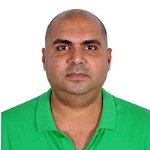
Hesham N. Mustafa
Professor , King Abdulaziz University Faculty of Medicine, Jeddah, Western Region
Saudi Arabia
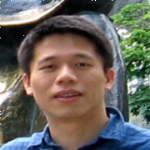
Hui Fu
First Affiliated Hospital of University of South China, Hengyang
China

Yoshihiro Tsuruo
Department of Anatomy and Cell Biology, Tokushima University Graduate School of Medical Science, Department of Anatomy and Cell Biology.
Japan
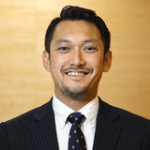
Joe Iwanaga
Tulane University, New Orleans, LA
United States

Yüksel Aydar
Prof. Dr., Eskişehir Osmangazi Üniversitesi Tıp Fakültesi, Eskisehir
TURKEY
Recorded research interests by subject area
Board members whose recorded research interests match each subject area the aims and scope defines. A member whose record lists several areas is counted in each; this is not independent expertise verification.
Areas within scope that no current member lists as a specialty: Gross and regional anatomy, Anatomical variation, Morphometry and anthropometry, Clinical and surgical anatomy, Radiological and sectional anatomy, Neuroanatomy, Developmental anatomy and embryology, Histology and microanatomy, Anatomy education, Dissection, preservation and documentation. Submissions in those areas are assessed with external reviewers.
How editorial decisions are governed
Summaries. The governing text is on the pages linked from each entry.
- Who decides
- The Editor-in-Chief conducts the initial scope and quality assessment. The board member handling it formulates a recommendation, and the decision rests with the Editor-in-Chief. Editorial policies.
- How a manuscript reaches an editor
- A manuscript suitable for further assessment is assigned to a board member working in the relevant anatomical specialty. Work outside scope may be declined with a stated reason. For editors.
- How review is conducted
- The journal uses single-blind review. Manuscripts that proceed to external peer review are normally assessed by at least two independent specialists in the relevant anatomical field. Peer review.
- Conflicts of interest
- Editors and reviewers declare personal, financial and institutional conflicts before accepting an assignment and recuse themselves where objectivity could be compromised. Editorial policies.
- An editor's own manuscript
- A submission an editor authored is a declarable conflict; it is handled independently of them and they take no part in its assessment or decision. Editorial policies.
- Human material
- Editors confirm that studies on human subjects or cadaveric material document ethics-committee approval, body-donation program compliance, Declaration of Helsinki adherence and specimen anonymization. Editorial policies.
- Research integrity
- Allegations of misconduct follow COPE guidance, and the record is corrected by erratum, corrigendum or retraction where it requires it. Editorial policies.
- Appeals and complaints
- Appeals against a decision and complex ethical concerns are directed to the Editor-in-Chief for adjudication. For editors.
The Submit Paper page lists the primary, alternative and assisted submission routes.